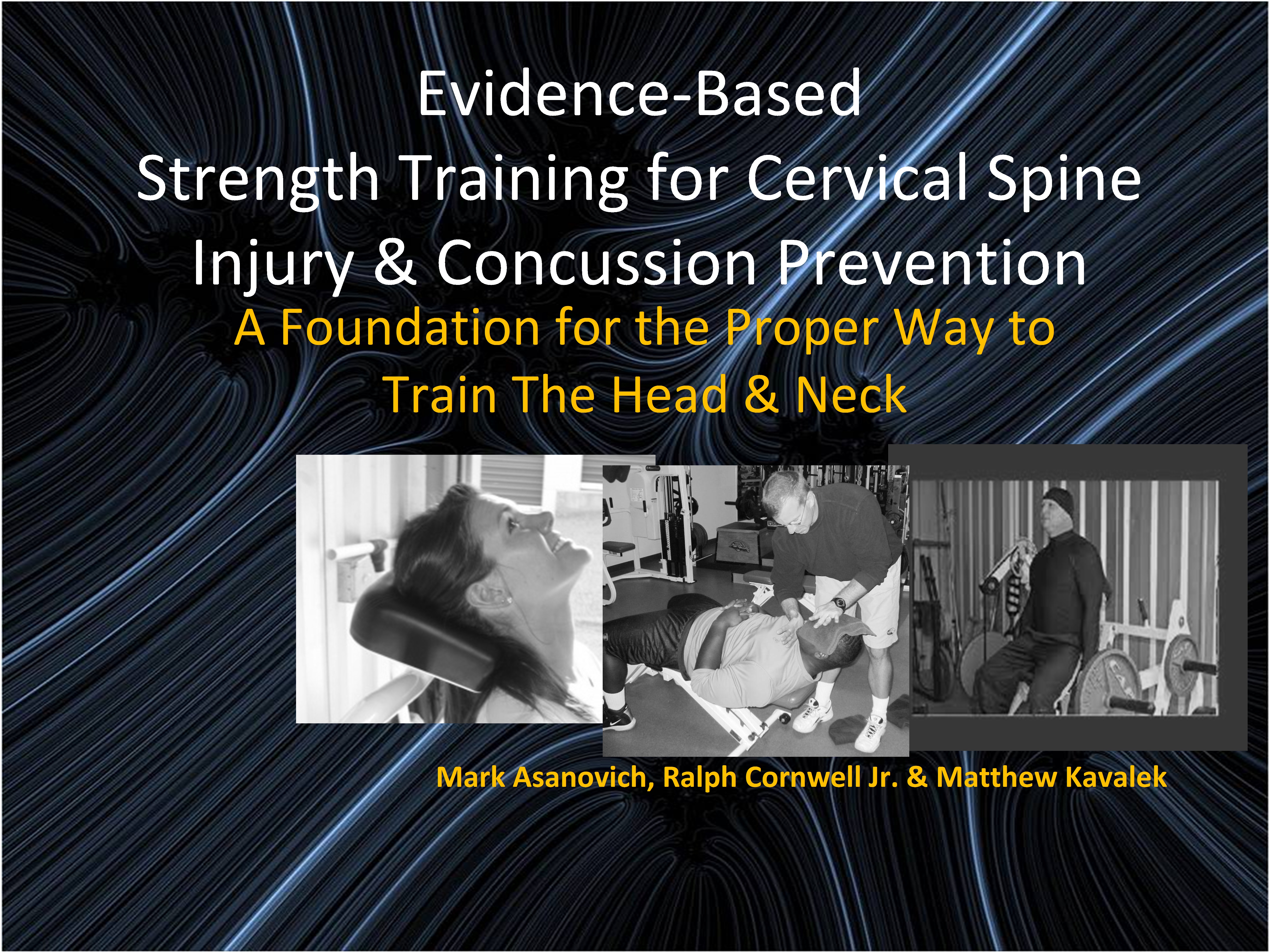
The best of ideas started as a simple notion of how to do something better or more efficiently.
When two individuals join their ideas collectively, sometimes it can result in something Big.
If those ideas come to fruition it can be paradigm shifting.
The NEW HEAD AND NECK MACHINE WILL CHANGE THE WAY WE LOOK AT CONCUSSION REDUCTION FOREVER.
www.concussionpreventionprotocol.com
Showing posts with label riley. Show all posts
Tuesday, October 30, 2012
Thursday, February 9, 2012
ConcussionPreventionProtocol DVD GOES ON SALE!
ConcussionPreventionProtocol
Just another WordPress.com site
Categories
Finally It’s Here! The Concussion Prevention Protocol DVD is Ready to go.
Posted by intelligentexerciserx on February 4, 2012
SUPER BOWL SPECIAL!!!!!!
Finally, The Concussion Prevention Protocol DVD IS Here!
Concussions have become a National Epidemic. Millions of dollars have been spent to fund studies over the last 15 years.The research continues but the number of concussions in Athletics INCREASE Each YEAR. Something proactive needed to be done. Through our research and input from some of the greatest minds in strength and conditioning we have created the Protocol to
Protect Your Athletes.
This Your opportunity to purchase the ONLY Evidence based CONCUSSION PREVENTION PROTOCOL DVD.
PRIORITY ONE
The most important goal of the strength & conditioning professional is to PRUDENTLY PREPARE the individual for the rigors of the task at hand. As such, given the catastrophic consequences of a cervical spine and traumatic brain injury, the strengthening of the neck and surrounding muscular structures of the cervical spine MUST be considered PRIORITY ONE in the prescription and design of exercise routines.The Educational DVD and Instructional Manual will give you the knowledge and expertise to Properly strength train the musculature of the head and neck and surrounding muscle groups.
“All athletes exposed to “head impacts” (collisions, head trauma) should place the highest priority on strengthening the musculature of the neck and trapezius. Reliable and evidenced based information has been unavailable until now. Coaches, athletes, and especially parents can rely upon this manual (DVD) for the most comprehensive information available on neck development. I can without any reservation recommend this DVD for the safest and most effective methods to strengthen the neck and trapezius.”
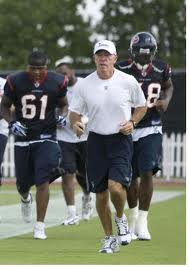
Dan Riley
Three Time Super Bowl Champion Strength Coach for the Washington Redskins
27 Year NFL Strength Coach (Washington Redskins & Houston Texans)
9 Year Collegiate Strength Coach United States Military Academy & Penn State
Recommended For:
- Exercise Physiologists
- Strength & Conditioning Specialists
- Sport Coaches
- Athletic Trainers
- Personal Trainers
- Home Based Health Care Providers
- Physical Therapists/Physical Therapist Assistants
- Occupational Therapists/ Occupational Therapist Assistants
- Physical Education Instructors
- Recreation Enthusiasts
- Parents
- Registered Dieticians
- Military Fitness Staffs
Go to www.concussionpreventionprotocol.com , optimumfitnesssonline.com or coachaprotraining.com
START PROTECTING YOUR ATHLETES TODAY!
Monday, February 14, 2011
Strength Train for Performance and Injury Protection
By Dan Riley, M.S.
As the science of strength training has evolved over the past 20 years, unfortunately weight room equipment has not kept pace. Most available machines are great for training a weight lifting team, or to improve athletic performance – but sports athletes need more.
Strong muscles are good shock absorbers. A strength regimen that strategically builds muscle strength in key areas of the body can provide an extra measure of injury protection on the field.
Strong neck muscles protect against concussion
Injury protection should be a priority, especially at the high school level. The place to start is adding a neck strengthening program into the exercise regimen.
When I was an NFL strength coach, neck machines and shoulder shrugging stations were available, and players were required to train these muscles at the beginning of their workout. Over time, neck “stingers” were nearly eliminated when neck development became the priority.
And with recent news of the dangers of concussion and its long-term cognitive effects, athletes should be encouraged to do all they can to protect themselves from injury.
Strong, shock-absorbing neck muscles help to minimize concussive forces, especially on the football field. Neck strength also protects soccer and baseball athletes from cumulative concussion problems, such as the repetitive impact force of heading the ball.
Thinking long term, machines should be purchased to develop total body strength in all five major body sections:
In a five-year study with Colorado Rockies baseball pitchers, the strength of the smaller muscles surrounding the shoulder capsule was tested at the beginning of each season. It was determined that if the external rotators of the rotator cuff were weak, or if there was a significant imbalance between the internal and external rotators, the incidence of a shoulder injury was extremely high during the season.
The smaller muscles surrounding the shoulder capsule are designed to protect joint integrity. These muscles include:
A well-designed strength program should target each of these muscle groups. Multi-joint movement will not generate maximum strength gains in each of these muscles. An isolation exercise for each of these muscles must be performed if maximum strength and protection of the shoulder capsule is the goal.
When I worked with NFL athletes, I found many who had ignored these areas of the body. Some had already been injured and many were extremely deficient in strength in the muscles surrounding the shoulder. Once these muscles groups were targeted, players responded almost immediately.
There is great value in balancing your strength program between protection and performance, but keep in mind: The dangers aren’t just from a catastrophic injury or sudden episode. They may also be the accumulative affect of the repetitive impact forces over time.
Dan Riley, M.S., is a strength and conditioning educator for the Memorial Hermann Sports Medicine Institute with 27 years experience as a strength trainer in the National Football League.
By Dan Riley, M.S.
Strong muscles are good shock absorbers. A strength regimen that strategically builds muscle strength in key areas of the body can provide an extra measure of injury protection on the field.
Strong neck muscles protect against concussion
Injury protection should be a priority, especially at the high school level. The place to start is adding a neck strengthening program into the exercise regimen.
When I was an NFL strength coach, neck machines and shoulder shrugging stations were available, and players were required to train these muscles at the beginning of their workout. Over time, neck “stingers” were nearly eliminated when neck development became the priority.
And with recent news of the dangers of concussion and its long-term cognitive effects, athletes should be encouraged to do all they can to protect themselves from injury.
Strong, shock-absorbing neck muscles help to minimize concussive forces, especially on the football field. Neck strength also protects soccer and baseball athletes from cumulative concussion problems, such as the repetitive impact force of heading the ball.
Thinking long term, machines should be purchased to develop total body strength in all five major body sections:
- Neck and traps (trapezius)
- Hips and legs
- Midsection
- Torso and shoulder capsule
- Arms
In a five-year study with Colorado Rockies baseball pitchers, the strength of the smaller muscles surrounding the shoulder capsule was tested at the beginning of each season. It was determined that if the external rotators of the rotator cuff were weak, or if there was a significant imbalance between the internal and external rotators, the incidence of a shoulder injury was extremely high during the season.
The smaller muscles surrounding the shoulder capsule are designed to protect joint integrity. These muscles include:
- Anterior head (frontal deltoid) – front raise
- Medial head (middle deltoid) – lateral raise
- Posterior head (rear deltoid) – bent-over raise
- Rotator cuff - internal rotation
- Rotator cuff - external rotation
A well-designed strength program should target each of these muscle groups. Multi-joint movement will not generate maximum strength gains in each of these muscles. An isolation exercise for each of these muscles must be performed if maximum strength and protection of the shoulder capsule is the goal.
When I worked with NFL athletes, I found many who had ignored these areas of the body. Some had already been injured and many were extremely deficient in strength in the muscles surrounding the shoulder. Once these muscles groups were targeted, players responded almost immediately.
There is great value in balancing your strength program between protection and performance, but keep in mind: The dangers aren’t just from a catastrophic injury or sudden episode. They may also be the accumulative affect of the repetitive impact forces over time.
Dan Riley, M.S., is a strength and conditioning educator for the Memorial Hermann Sports Medicine Institute with 27 years experience as a strength trainer in the National Football League.
| |||||
Monday, February 7, 2011
The Rules Of Manual Resistance
Dan coached at West Point, Penn State, with the Washington Redskins and also with the Houston Texans. He is still an important force in the strength training community and if you ever get a chance to hear him speak take advantage of it.
When you train manually never neglect to pause at the top of each repetition with pressure. After pausing the key is a very slowly application of force by the spotter during the lowering of the movement.
The most important rule is rule number one...Know the Rules!
2). The Lifter begins each exercise with the goal of 6-8 reps. This requires pacing, in other words, the first repetition is not an all out effort. The effort must be increasing for every subsequent repetition.
2a). The Spotter should allow the lifter to perform each repetition at the same pace or speed of movement. This will require different amounts of pressure by the spotter during the rep (because of leverage). The lifter will feel as though the resistance is similar at all joint angles (the resistance will feel smooth).
3). The lowering phase of every repetition should be slower than the raising phase. A guide in learning manual resistance is raise the involved limbs up in 1-2 seconds or at a 1-2 count and lower them in 4-5 seconds or at a 4 or 5 count.
3a). The Spotter must make sure that they feel more force by the lifter during the lowering phase of each repetition.
4). The Lifter should continually contract their target musculature during the raising phase and the lowering phase of every repetition.
5). The Lifter should pause with pressure against the spotter's resistance at the top of every movement. Pausing with pressure and no relaxation is extremely difficult.
5a). The Spotter should insure the lifter is applying force at the top of the movement. The spotter must feel if the lifter is relaxing. The spotter must ease slowly into the lowering phase of the exercise. Slowly easing into the lowering phase or decent is extremely important.
6). The exercise is completed when the athlete reaches momentary muscular failure.
Get Strong
Central City High School Nebraska
Subscribe to:
Posts (Atom)