Showing posts with label strength training. Show all posts

Thursday, February 9, 2012

ConcussionPreventionProtocol DVD GOES ON SALE!

ConcussionPreventionProtocol

Just another WordPress.com site


Finally It’s Here! The Concussion Prevention Protocol DVD is Ready to go.

Posted by intelligentexerciserx on February 4, 2012
SUPER BOWL SPECIAL!!!!!!
Finally, The Concussion Prevention Protocol DVD IS Here!
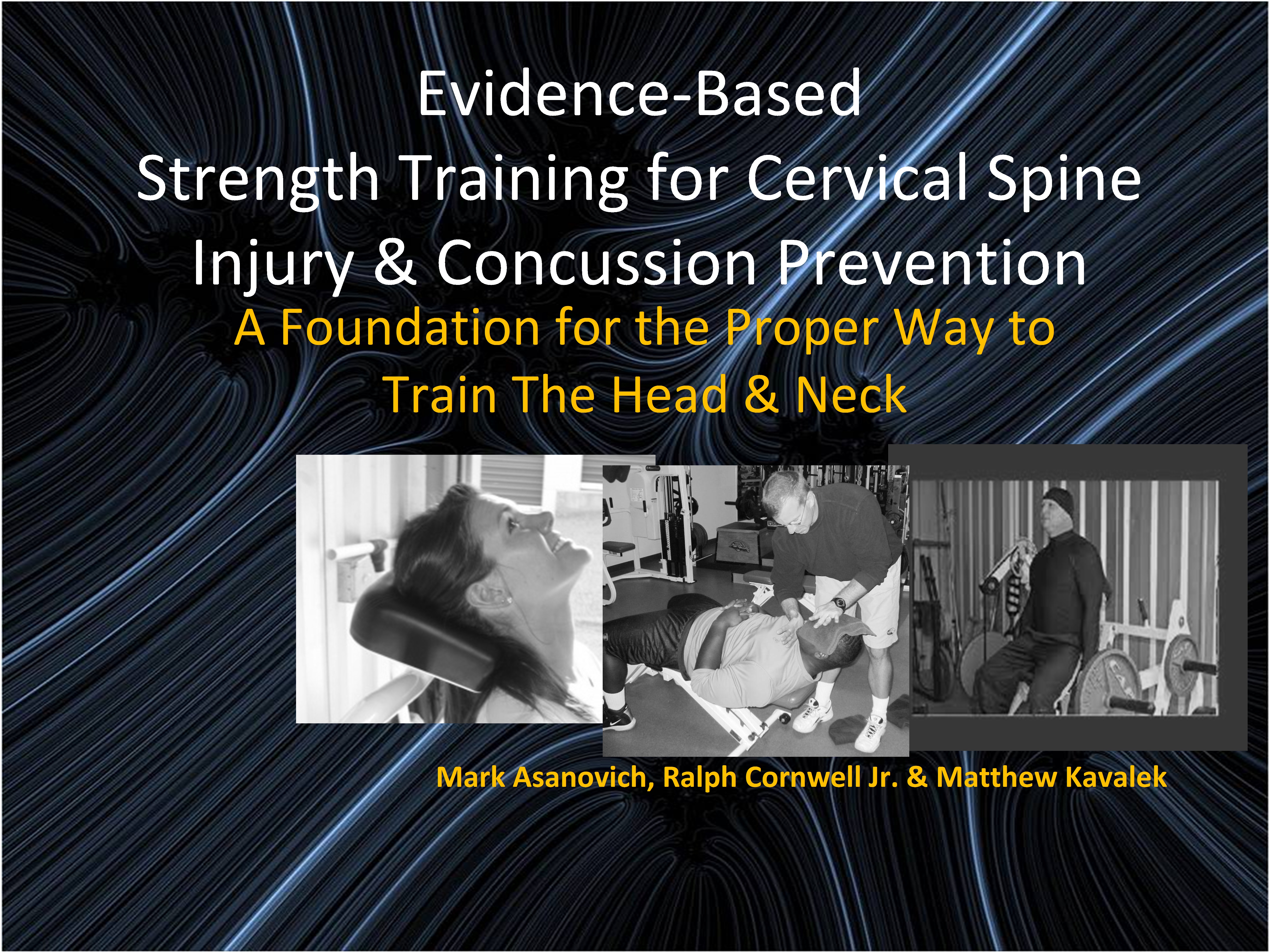
Concussions have become a National Epidemic.  Millions  of dollars have been spent to fund studies over the last 15 years.The research continues but the number of concussions in Athletics INCREASE Each YEAR. Something proactive needed to be done. Through our research and input from some of the greatest minds in strength and conditioning we have created the Protocol to
Protect  Your Athletes.
This Your opportunity to purchase the ONLY Evidence based CONCUSSION PREVENTION PROTOCOL DVD.
PRIORITY ONE
          The most important goal of the strength & conditioning professional is to PRUDENTLY PREPARE the individual for the rigors of the task at hand. As such, given the catastrophic consequences of a cervical spine and traumatic brain injury, the strengthening of the neck and surrounding muscular structures of the cervical spine MUST be considered PRIORITY ONE in the prescription and design  of exercise routines.
The Educational DVD and Instructional Manual will give you the knowledge and expertise to Properly strength train the musculature of the head and neck and surrounding muscle groups.

“All athletes exposed to “head impacts” (collisions, head trauma) should place the highest priority on strengthening the musculature of the neck and trapezius. Reliable and evidenced based information has been unavailable until now. Coaches, athletes, and especially parents can rely upon this manual (DVD) for the most comprehensive information available on neck development. I can without any reservation recommend this DVD for the safest and most effective methods to strengthen the neck and trapezius.”
Dan Riley                                                                                                                                                                             
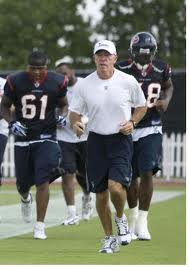
Three Time Super Bowl Champion Strength Coach for the Washington Redskins
27 Year NFL Strength Coach (Washington Redskins & Houston Texans)
9 Year Collegiate Strength Coach United States Military Academy & Penn State


 Recommended For:

  • Exercise Physiologists
  • Strength & Conditioning Specialists
  • Sport Coaches
  • Athletic Trainers
  • Personal Trainers
  • Home Based Health Care Providers
  • Physical Therapists/Physical Therapist Assistants
  • Occupational Therapists/ Occupational Therapist Assistants
  • Physical Education Instructors
  • Recreation Enthusiasts
  • Parents
  • Registered Dieticians
  • Military Fitness Staffs
TAKE ADVANTAGE OF OUR INTRODUCTORY SALE PRICE  74.99 s&h included.
Go to www.concussionpreventionprotocol.com , optimumfitnesssonline.com or coachaprotraining.com
START PROTECTING YOUR ATHLETES TODAY!


Tuesday, December 27, 2011

Project Neck Case Study Eight Week Results

Project Neck Case Study Eight Week Results

Eight Weeks Of Training On The Pendulum 5 Way Head And Neck Machine
Ralph Cornwell is a Ph.D. candidate in health promotion/human performance at Virginia Polytechnic Institute and State University. Prior to pursuing his Doctoral Degree he was a collegiate strength coach

Ralph finished a pilot study on head and neck training.  The purpose is building a training model for force dissipation by increasing the circumference of the head and neck musculature.  Dissipation of force from contact will lower concussive forces and protect the athlete during play.

Most Improvement in 8 weeks

4 inch circumference increase in upper neck,
3 3/4 inch circumference change in lower neck
53. 5 pound increase in head and  neck extension
49.5 pound increase in flexion
140 lb increase in parallel grip row
261 lb increase in levator scapula/ shoulder girdle elevation barbell movement
describe the image
Least  Improvement in 8 weeks

1.5 inch increase in circumference upper neck
2.5 inch increase in circumference in lower neck
125 pound increase in parallel grip row
47.5 pound increase in neck extension
44 pound increase in head and neck flexion
215 pound increase in levator scapula/ shoulder girdle elevation barbell movement


Keep in mind, the speed of movement used was 3-4 second concentric 4-5 second eccentric, there was a pause in the contracted position of 1 second or the rep was not counted.  Over the weeks of the study the form became better and the weight increases continued steadily without compromising the strictest of technique required.


WE MUST PROTECT THE ATHLETE!

Friday, June 3, 2011

Weight Room Charts Send The Wrong Message To Athletes

5 pounds x 10= 75 pounds
225 pounds + 75 pounds = 300 pound max
Once a value is assigned to the repetition based upon the study, in this case 0.0333,  a ‘Weight Lifting Percentage Chart’ is constructed for the general population.
chart
To use the chart a weightlifter simply finds his or her maximum along the left side.  The weight to workout with is taken from the chart based on the percentage and repetitions they are asked to utilize in their workout plan.
Sample of an athletes instructions from the Coach…
Today we are going to use 75% of our maximum for 10 reps, then 85% of our maximum for 6 reps and 90% for 4 on the bench press.  The above chart tells you the weight you should be working out with based on your individual max to Get Strong.
The athlete with a 270 max chooses…
75% – 205 x 10
85% – 230 x 6
90% – 245 x 4
Exactly what these percentages really mean to the muscle tissue is a huge question.  Weight Charts can be used as guides, yet to be accurate and take into account individual differences you need to make a chart for every exercise and every individual.
Try this to explore the reasoning of many charts…
Find your one repetition maximum in a multi-joint exercise such as a free weight barbell squat or bench press.  Select a percentage such as 65%, 75% or 85% of that maximum and do as many repetitions as possible with that percentage and record your repetitions.
describe the image
Now select a ‘single-joint‘ exercise such as barbell curl and repeat the test.  Whether trained or untrained you will find you achieve fewer repetitions at the same percentage of 1RM with a single-joint movement and more repetitions with a multi-joint movement.   In other-words multi -joint and single-joint exercises have different values of a repetition.  The amount of muscle mass involved in a multi-joint exercise and the neural system alter the outcome.
If this same test is done with a large group of athletes, say a team, you will get a similar result.  You will also find a great deal of variability from athlete to athlete in the data.
bp
Try this also……
Take all your athletes who’s maximum is the same in a particular exercise.  Let’s say their maximum is 270 pounds on the bench press.  Using 75% of their max in the above chart (205), test the maximum amount of repetitions they can do.
In general, most may achieve 10 reps as indicated on the chart, but you may find an athlete who can only do 6 reps or another who can do 15.  Very normal stuff, as we all have different neurological efficiencies.
describe the imageCharts are charts, they set a course.  They give direction. Understand that they are not based on the scientific method and each athlete will be effected differently with the recommended weights and repetitions.
The best chart to hang in your weight room is the ‘Effort Chart’.  When you go to it, it says…. give a 100%  effort to any weight you choose to….. Get Strong.


describe the image
Pendulum 3 Way Row

Wednesday, May 18, 2011

The Ralph Cornwell Files

Eight Weeks Of Training On The Pendulum 5 Way Head And Neck Machine
describe the image
Ralph Cornwell is a Ph.D. candidate in health promotion/human performance at Virginia Polytechnic Institute and State University. Prior to pursuing his Doctoral Degree he was a collegiate strength coach.
describe the imageRalph finished a pilot study on head and neck training.  The purpose is building a training model for force dissipation by increasing the circumference of the head and neck musculature.  Dissipation of force from contact will lower concussive forces and protect the athlete during play.
Most Improvement in 8 weeks

4 inch circumference increase in upper neck,
3 3/4 inch circumference change in lower neck
53. 5 pound increase in head and  neck extension
49.5 pound increase in flexion
140 lb increase in parallel grip row
261 lb increase in levator scapula/ shoulder girdle elevation barbell movement
describe the image
Least  Improvement in 8 weeks

1.5 inch increase in circumference upper neck
2.5 inch increase in circumference in lower neck
125 pound increase in parallel grip row
47.5 pound increase in neck extension
44 pound increase in head and neck flexion
215 pound increase in levator scapula/ shoulder girdle elevation barbell movement
elon2elon5
Keep in mind, the speed of movement used was 3-4 second concentric 4-5 second eccentric, there was a pause in the contracted position of 1 second or the rep was not counted.  Over the weeks of the study the form became better and the weight increases continued steadily without compromising the strictest of technique required.
describe the imagedescribe the image
Use The Pendulum 5 Way Head And Neck Machine to Get Strong.
Ask about the New 4 Way Pendulum Head And Neck Machine.

Thursday, March 31, 2011

Project Neck Rolls On!

Project Neck is off and running!
Project Neck, now being conducted at Elon University in North Carolina.  Test subjects are working hard.
The Project Neck Lab consists of two state-of the- art pieces of strength training equipment being provided by Pendulum of Rogers Athletic. We have a compact squat rack and several hundreds of pounds of weight and a olympic bar.

Project Neck differs from any other concussive forces study in the fact that this is the only study to ever research the head and neck together. The only study to induce hypertrophy of the capital muscle of the head and neck. The only study to examine  neck cylinder size and how that size difference lowers concussive forces.
Project Neck’s goal is to build a better dissipator  of kinetic energy by anatomical and morphological changes of the musculature of the head and neck through resistance training.
Project Neck is a simple study. We want to lower concussive and subconcussive forces.
We believe Project Neck to be a noble cause.  Project Neck is the only research study looking at what can be done  prior to the concussive episode.  If Project Neck’s research helps to lower dangerous forces to the brain through an established protocol we will feel our time to be well spent.  A protocol would allow an athlete to prepare for the rigors of his or her sport.  Concussions will always be a risk of playing competitive sports and the only cure for concussions is to stop playing sports.

The mission of every sport coach, strength coach or parent should be to protect the athlete first. Project Neck’s research results hope to give coaches and parents the tools to prepare their athletes for competition.

Tuesday, March 1, 2011

Give 100% Toward Everything You Put Your Hand To

Give 100% Toward Everything You Put Your Hand To                tylerMike Gittleson was the Director of Strength & Conditioning at the University of Michigan for 30 years and was a part of 15 Football Championships in that time. He explains, what you do speaks so well.
As a coach in the off season after every run I would huddle the players and read or tell them something that I felt was important to their growth. This would often require extensive preparation and memorization on my part, and if the message was particularly meaningful memorization on their part.
I spent a great deal of my evenings during my career reading and studying to find appropriate communique. To me the significance of the point presented after the run was an important part of the development of the 'will' of each athlete.  After all, to continually compete for the championship of your conference requires a special resolve and discipline.  Make no mistake the athletes  were in college and there to learn more than just weight training and running.
describe the imageTyler Hobson the inventor of Pendulum sent me a note and in it he described his father.  I think his description of his Dad and his beliefs would be worth reading to your athletes.
describe the imageKentucky Weight Room
He believed that a man should do what he said he would, and that you should give 100% toward everything you put your hand to.  He was a man that believed the products of your efforts was a signature for everyone to read, and it should be something you are proud of. At the end of the day you could rest knowing you gave your best, you held nothing back.
tyler2
Kansas State Weight Room
Giving 100% toward everything you put your hand to is the way to Get Strong.
Tags: 

Monday, February 14, 2011

Strength Train for Performance and Injury Protection

Strength Train for Performance and Injury Protection
By Dan Riley, M.S.

As the science of strength training has evolved over the past 20 years, unfortunately weight room equipment has not kept pace. Most available machines are great for training a weight lifting team, or to improve athletic performance – but sports athletes need more.
Strong muscles are good shock absorbers. A strength regimen that strategically builds muscle strength in key areas of the body can provide an extra measure of injury protection on the field.
Strong neck muscles protect against concussion
Injury protection should be a priority, especially at the high school level. The place to start is adding a neck strengthening program into the exercise regimen.
When I was an NFL strength coach, neck machines and shoulder shrugging stations were available, and players were required to train these muscles at the beginning of their workout. Over time, neck “stingers” were nearly eliminated when neck development became the priority.
And with recent news of the dangers of concussion and its long-term cognitive effects, athletes should be encouraged to do all they can to protect themselves from injury.
Strong, shock-absorbing neck muscles help to minimize concussive forces, especially on the football field. Neck strength also protects soccer and baseball athletes from cumulative concussion problems, such as the repetitive impact force of heading the ball.
Thinking long term, machines should be purchased to develop total body strength in all five major body sections:
  1. Neck and traps (trapezius)
  2. Hips and legs
  3. Midsection
  4. Torso and shoulder capsule
  5. Arms
Strong shoulder muscles protect joints, tendons and ligaments
In a five-year study with Colorado Rockies baseball pitchers, the strength of the smaller muscles surrounding the shoulder capsule was tested at the beginning of each season. It was determined that if the external rotators of the rotator cuff were weak, or if there was a significant imbalance between the internal and external rotators, the incidence of a shoulder injury was extremely high during the season.
The smaller muscles surrounding the shoulder capsule are designed to protect joint integrity. These muscles include:
  • Anterior head (frontal deltoid) – front raise
  • Medial head (middle deltoid) – lateral raise
  • Posterior head (rear deltoid) – bent-over raise
  • Rotator cuff - internal rotation
  • Rotator cuff - external rotation
The rear deltoid muscle is designed to decelerate the arm in any throwing motion. Quarterbacks, softball and baseball players, javelin throwers, etc., often complain of soreness or injury in this area.
A well-designed strength program should target each of these muscle groups. Multi-joint movement will not generate maximum strength gains in each of these muscles. An isolation exercise for each of these muscles must be performed if maximum strength and protection of the shoulder capsule is the goal.
When I worked with NFL athletes, I found many who had ignored these areas of the body. Some had already been injured and many were extremely deficient in strength in the muscles surrounding the shoulder. Once these muscles groups were targeted, players responded almost immediately.
There is great value in balancing your strength program between protection and performance, but keep in mind:  The dangers aren’t just from a catastrophic injury or sudden episode. They may also be the accumulative affect of the repetitive impact forces over time.
Dan Riley, M.S., is a strength and conditioning educator for the Memorial Hermann Sports Medicine Institute with 27 years experience as a strength trainer in the National Football League.
Sports Medicine Institute Medical Staff


Saturday, February 12, 2011

M-i-s-s-i-s-s-i-p-p-i State Strength And Conditioning Clinic

Get Strong

M-i-s-s-i-s-s-i-p-p-i State Strength And Conditioning Clinic

 
Mississippi State Strength and Conditioning Clinic              
Set For February 25-26, 2011                                             

miss

The Mississippi State University Strength and Conditioning Staff officially invites you and your staff to join us at the 2011 Mississippi State University Strength & Conditioning Clinic.
The clinic will be Friday, February 25th, 2011, from 5 p.m. - 8 p.m. and Saturday, February 26th, 2011, from 7:30 a.m. - 4:00 p.m., with lunch being provided.

Matt Balis, Chad Smith and James Townsend of the Mississippi State Strength and Conditioning Staff will kickoff the 2011 Clinic by speaking Friday evening. Saturday guest speakers for the clinic will include the following:

Jeff Connors, Director of Strength and Conditioning, East Carolina University

Michael Doescher, Head Strength and Conditioning Coach, Valdosta State University

Mike Gittleson, Former Director of Strength and Conditioning, University of Michigan

Lewis Caralla, Assistant Strength and Conditioning Coach, Georgia Tech

Bryan Miller, Head Strength and Conditioning Coach, Oregon State University
Chip Smith, Founder and President, Competitive Edge Sports 
 If we can be of any assistance, please feel free to call or e-mail James Townsend at 662-325-8582, or Matt Balis at 662-325-8627.

We look forward to seeing you!

describe the image
describe the image
Pendulum In The M-i-s-s-i-s-s-i-p-p-i State Weight Room

Monday, February 7, 2011

The Rules Of Manual Resistance


The Rules Of Manual Resistance                                              
rileyIn 1979 Dan Riley introduced Manual Resistance to America at the National Strength Coaches Convention.  More importantly Dan demonstrated to exercise physiology researchers that muscular strength and functional abilities could be enhanced significantly without the use of barbells or machines utilizing manual techniques.
Dan coached at West Point, Penn State, with the Washington Redskins and also with the Houston Texans. He is still an important force in the strength training community and if you ever get a chance to hear him speak take advantage of it.
manual1
When you train manually never neglect to pause at the top of each repetition with pressure. After pausing the key is a very slowly application of force by the spotter during the lowering of the movement.

The most important rule is rule number one...Know the Rules!
describe the image1). If you use Manual Resistance make sure you and your spotter know and understand the rules.

2). The Lifter begins each exercise with the goal of 6-8 reps. This requires pacing, in other words, the first repetition is not an all out effort. The effort must be increasing for every subsequent repetition.

2a). The Spotter should allow the lifter to perform each repetition at the same pace or speed of movement. This will require different amounts of pressure by the spotter during the rep (because of leverage). The lifter will feel as though the resistance is similar at all joint angles (the resistance will feel smooth).

3). The lowering phase of every repetition should be slower than the raising phase. A guide in learning manual resistance is raise the involved limbs up in 1-2 seconds or at a 1-2 count and lower them in 4-5 seconds or at a 4 or 5 count.

3a). The Spotter must make sure that they feel more force by the lifter during the lowering phase of each repetition.

4). The Lifter should continually contract their target musculature during the raising phase and the lowering phase of every repetition.

manual24a). The Spotter must give feedback to the lifter to ensure there is always a constant contraction on every repetition performed. The spotter should identify any relaxation or loss of force by the lifter during the movement.

5). The Lifter should pause with pressure against the spotter's resistance at the top of every movement. Pausing with pressure and no relaxation is extremely difficult.

5a). The Spotter should insure the lifter is applying force at the top of the movement. The spotter must feel if the lifter is relaxing. The spotter must ease slowly into the lowering phase of the exercise. Slowly easing into the lowering phase or decent is extremely important.

6). The exercise is completed when the athlete reaches momentary muscular failure.
describe the image
Get Strong
kansas
Central City High School Nebraska